

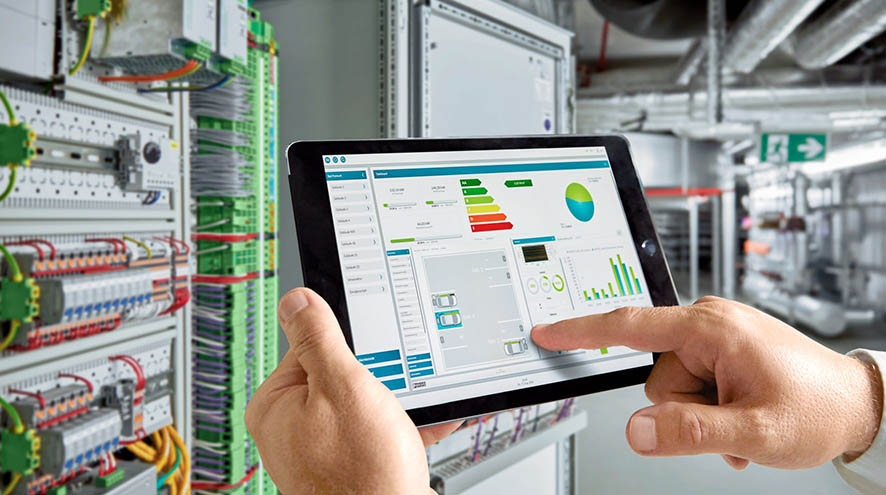
Building Automation for UAE Facilities: From Reactive Firefighting to Proactive Control
Picture a typical week for a facility manager running a commercial building or residential tower in Dubai: a tenant complains the office is too cold, a chiller alarm gets missed until a technician happens to walk past it, and the utility bill arrives higher than expected with no clear reason why. HVAC, lighting, and security all run on separate systems, each with its own panel, its own login, and no shared view of what's actually happening across the property. Managing a building this way means spending most of your time reacting to problems after they've already cost you comfort, money, or both.
A building automation system exists to fix exactly this. This article explains what it actually does, the specific problems it solves, and what to watch for before choosing a provider, without the vague "transform your business" language a lot of building automation content leans on.
What Is a Building Automation System?
A building automation system (BAS) is a centralized platform that connects and controls a building's HVAC, lighting, security, and energy systems from one interface, instead of managing each separately. You'll also see it called a Building Management System (BMS), and in practice the two terms are used interchangeably across the industry. InterKraft covers both angles as separate services: our building automation service focuses on the smart-building and energy-efficiency side, while our Building Management System service focuses specifically on integrating with a property's electrical infrastructure.
The Everyday Frustrations Building Automation Actually Solves
Before getting into features, it's worth naming the specific problems facility managers deal with, since these are what a BAS is actually built to remove:
- Manual monitoring: Physically walking the building to check thermostats, lights, and equipment, rather than seeing it all from one dashboard.
- Disconnected systems: HVAC, lighting, and security each running on separate panels and software, with no shared view of the building as a whole.
- Energy bills that don't add up: Paying for heating, cooling, or lighting in spaces that are unoccupied, with no easy way to see where the waste is coming from.
- Reactive maintenance: Finding out equipment has failed only after a complaint or a breakdown, rather than catching early warning signs.
- Inconsistent occupant comfort: Manual, building-wide temperature settings that leave some areas too hot or too cold depending on occupancy and time of day.
How Does a Building Automation System Work?
A BAS uses sensors and controllers placed throughout the property to continuously collect data on temperature, occupancy, energy use, and equipment status. That data feeds into central software, giving facility managers one dashboard to monitor and adjust systems in real time, from a desktop or a phone. Data collected over time (often called trending) makes it possible to spot patterns, such as a unit gradually drawing more power than it used to, well before it becomes a breakdown. Alarms flag abnormal conditions immediately, so a problem gets a facilities team's attention right away instead of waiting for a tenant to notice first.
What Kind of Savings and Benefits Can You Actually Expect?
Estimates vary by building and by how much energy waste existed beforehand, but reductions in utility costs of up to 30% are commonly cited across facility management sources when HVAC and lighting are automated based on occupancy and schedules rather than run continuously. Beyond the utility bill, the more consistent benefit is the shift from reactive to predictive maintenance: catching a failing component through the data before it causes downtime, rather than after. For property developers and facility managers running more than one building, automation systems are also built to scale, so the same approach that works for a single tower can extend across a multi-property portfolio without starting from scratch each time.
What to Watch Out For Before You Commit
Building automation isn't without real trade-offs, and it's worth going in aware of them rather than finding out after installation. A common issue in this industry is vendor lock-in: many systems are built as closed platforms, meaning the sensors, controllers, and software only work well with that one vendor's own ecosystem. If you later want to add a different brand of equipment or switch providers, a closed system can make that difficult and expensive. This is why InterKraft designs building automation systems around open protocols like BACnet and KNX rather than a single proprietary platform, so your building isn't locked into one supplier's roadmap.
The other consideration is cybersecurity. A BAS connects building systems to a network, and as with any connected infrastructure, that connection needs to be secured properly, not treated as an afterthought during installation.
Does UAE Regulation Make This More Than Just Optional?
In Dubai specifically, this is increasingly not a discretionary upgrade. Al Sa'fat, Dubai's green building rating system, now sets smart lighting and occupancy-based controls as a minimum requirement for new buildings, not an optional add-on for a higher rating tier. If you're a property developer planning a new building in Dubai, this is worth factoring into design decisions early rather than retrofitting later. InterKraft's lighting and sensor control service is built specifically around this compliance requirement.
Is Building Automation Only for Large Commercial Buildings?
No. It's easy to assume this technology is only worth it at the scale of a large office tower or shopping mall, but systems scale down to a single residential building as well as up to a large multi-property portfolio. The core value, which is real-time visibility instead of manual monitoring, applies at almost any building size.
Frequently Asked Questions
Is a Building Automation System (BAS) the same as a Building Management System (BMS)?
In practice, yes, the terms are used interchangeably across the industry. Both describe a centralized system that monitors and controls a building's HVAC, lighting, security, and energy use from one platform, rather than managing each system separately.
How long does it take for building automation to pay for itself?
It depends on the building's size and current energy waste, but many facilities see a return through reduced utility costs and lower maintenance spending within a few years, on top of the operational time saved from not manually managing separate systems.
Can building automation be added to an existing building, or only new construction?
Both. Retrofitting an existing building takes more planning around existing wiring and equipment, but it's a common and practical option, not something limited to new-build projects.
Is building automation only worth it for large commercial buildings?
No. Systems scale down to single residential towers or small commercial buildings as well as up to large multi-property portfolios, so the value isn't limited to large facilities.
If you're weighing whether building automation makes sense for your property, InterKraft's building automation and Building Management System services cover both the smart-building and electrical integration sides of this, and our team can walk through what a realistic setup would look like for your specific building.
Adam Jhon
Building automation is a game-changer for property managers and developers! The integration of systems like HVAC, lighting, and energy management is crucial for reducing costs and enhancing operational efficiency. Excited to see how this technology evolves!
Jusctin Dacon
I completely agree! The future of real estate relies on smart infrastructure. Automated systems not only save on energy but also improve security and comfort for occupants. It’s amazing to see how building automation is becoming a key part of the industry.
Jacklin July
The integration of IoT into building systems truly takes automation to the next level. This article highlights the immense potential of smart buildings for B2B clients. It's exciting to see how these innovations are transforming the industry!